

Product design · Healthcare
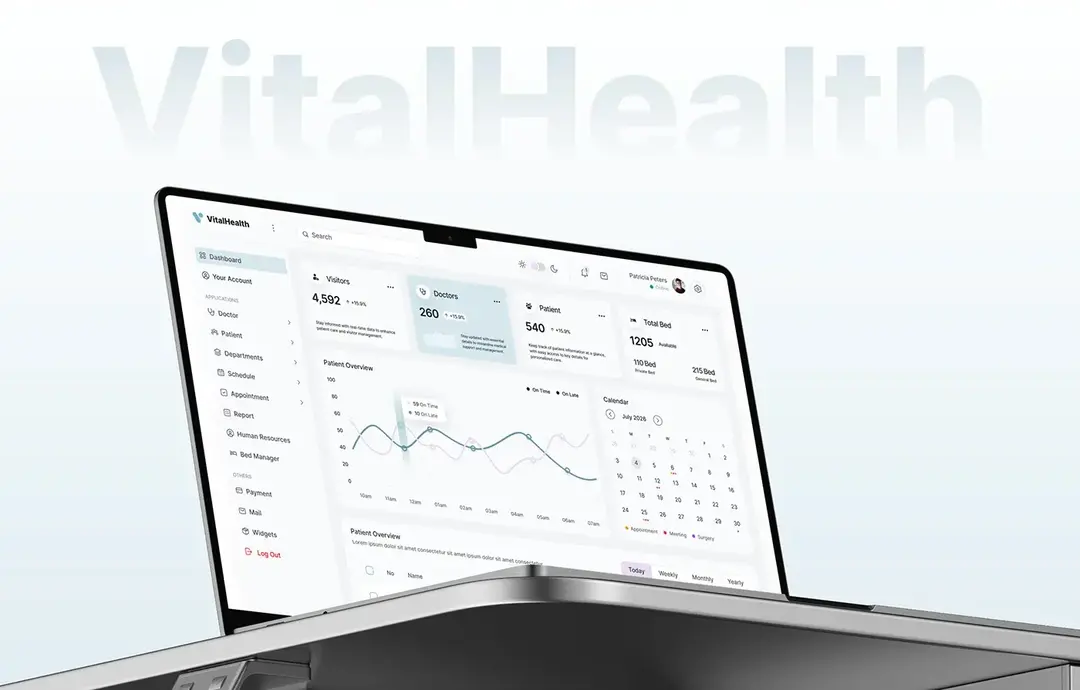
VitalHealth
A healthcare platform with more than 50 screens, from the design process to the final dashboard.
Read the case study →Most MVP development services leave founders translating between a designer and a coder; I do both, so your React app ships looking like its Figma file. I'm Maniruzzaman Jubayer, and I work with founders across Europe, the US, the Gulf and Asia in hours that overlap theirs.
Free 30 min intro call · One fixed quote · No retainer
Trusted by teams at






 Designed and built by Maniruzzaman Jubayer, design engineer.
These are the four problems founders describe on almost every first call with me.
When one studio designs and another builds, spacing, empty states and error messages get guessed.
I design and build from one Figma file and one Slack channel, so nothing is lost inside a handover document that nobody reads twice.
Fast first builds often skip shared components, so each new feature copies old code and every copy breaks in its own way.
I start with a small component library in code that mirrors the design system, and assemble every screen from it.
A model reply that appears after a long silence feels broken, and an answer without a source feels made up.
I stream responses, show where answers come from, and build the loading, failure and undo states around the model.
Every release adds a library and a little weight, until pages lag on a mid-range phone. Google counts a page as good when its main content appears within 2.5 seconds, so I measure that on real devices and treat a slow page as a bug.
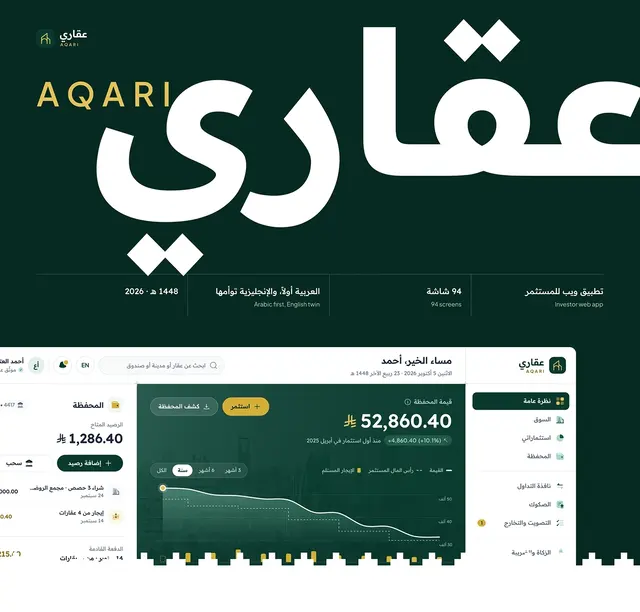
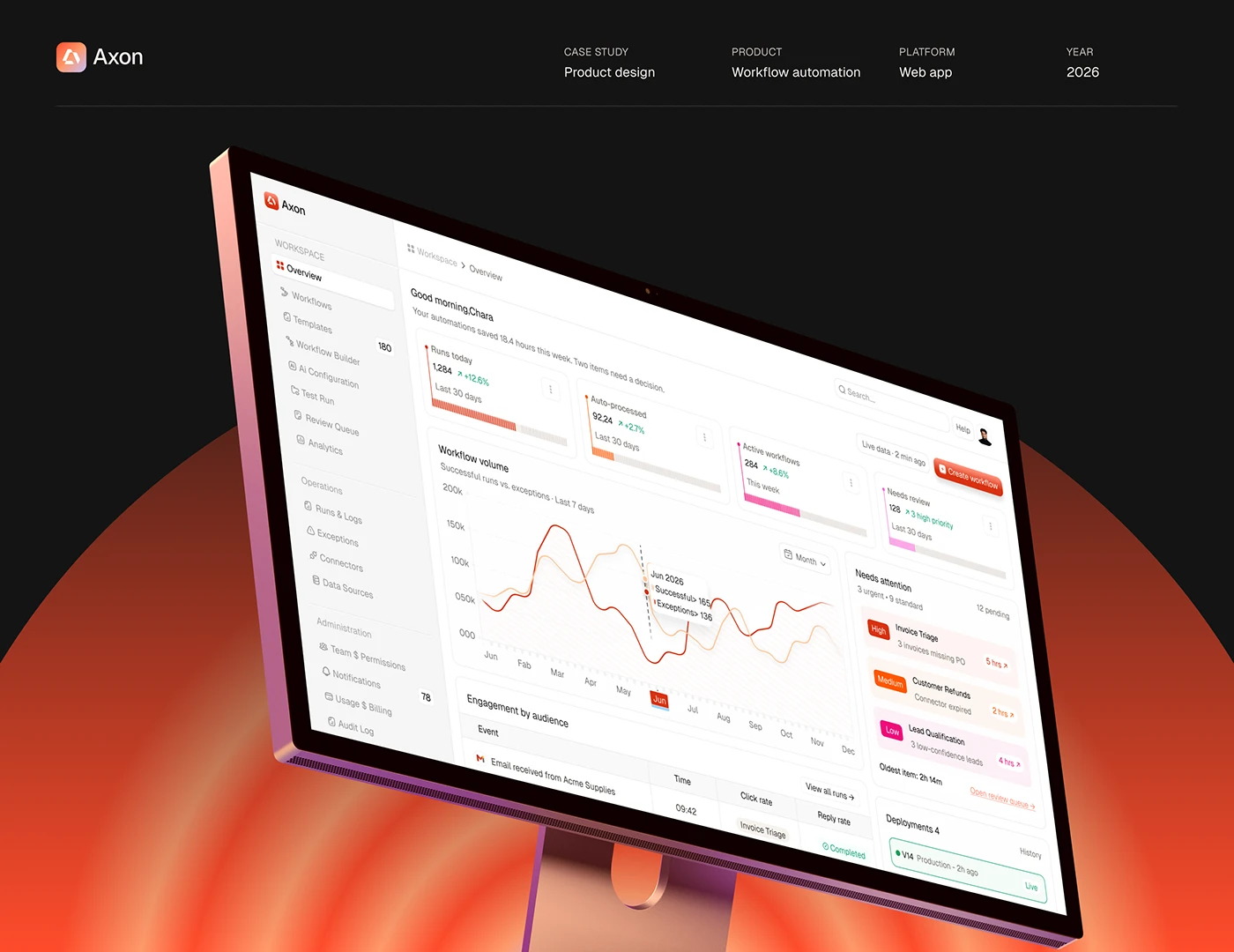
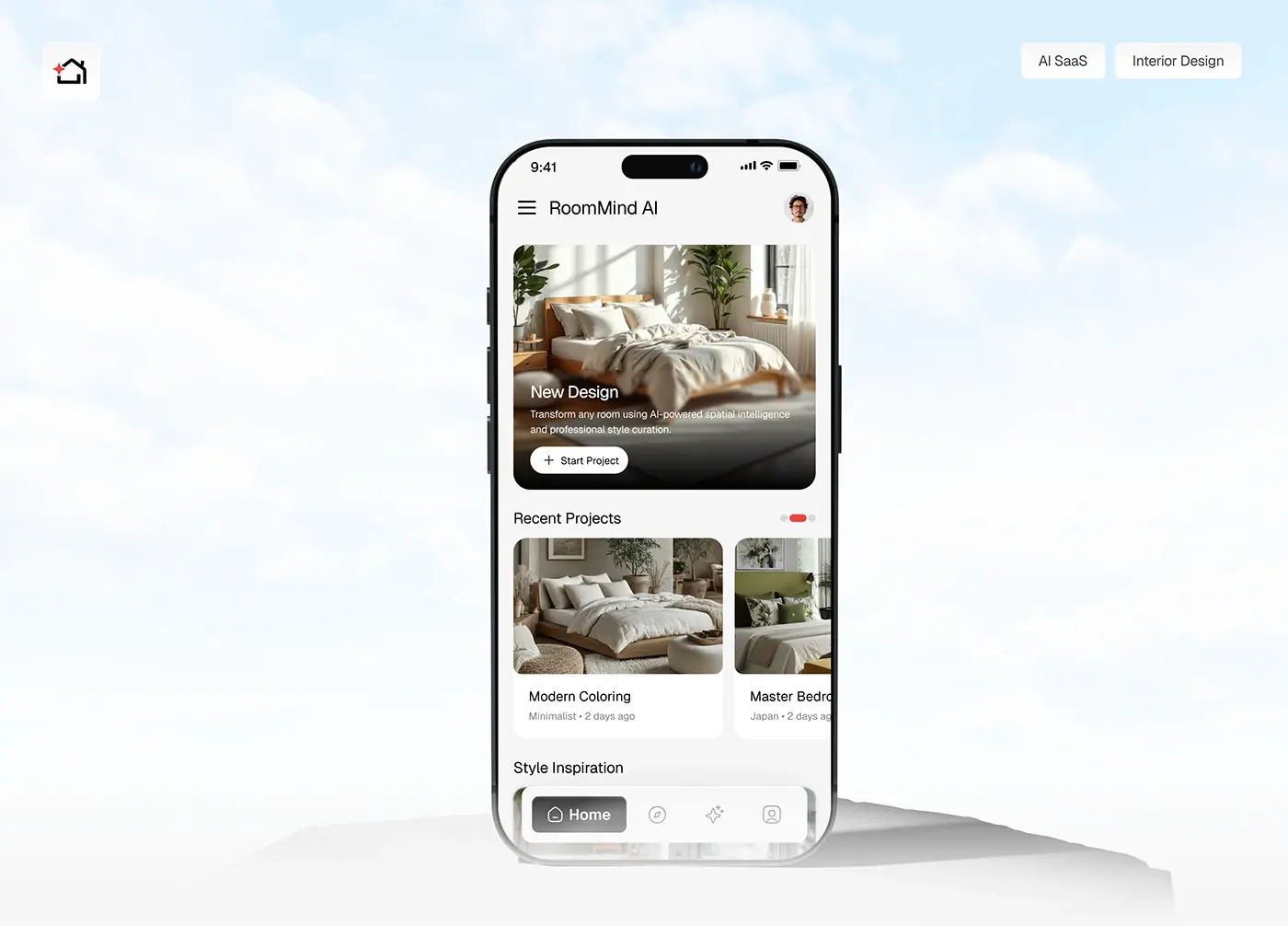
A healthcare SaaS, a delivery app and a fintech SaaS website, all designed by me. Each shows the level of interface detail I carry into React.
Product design · Healthcare
A healthcare platform with more than 50 screens, from the design process to the final dashboard.
Read the case study →
Product design · Logistics
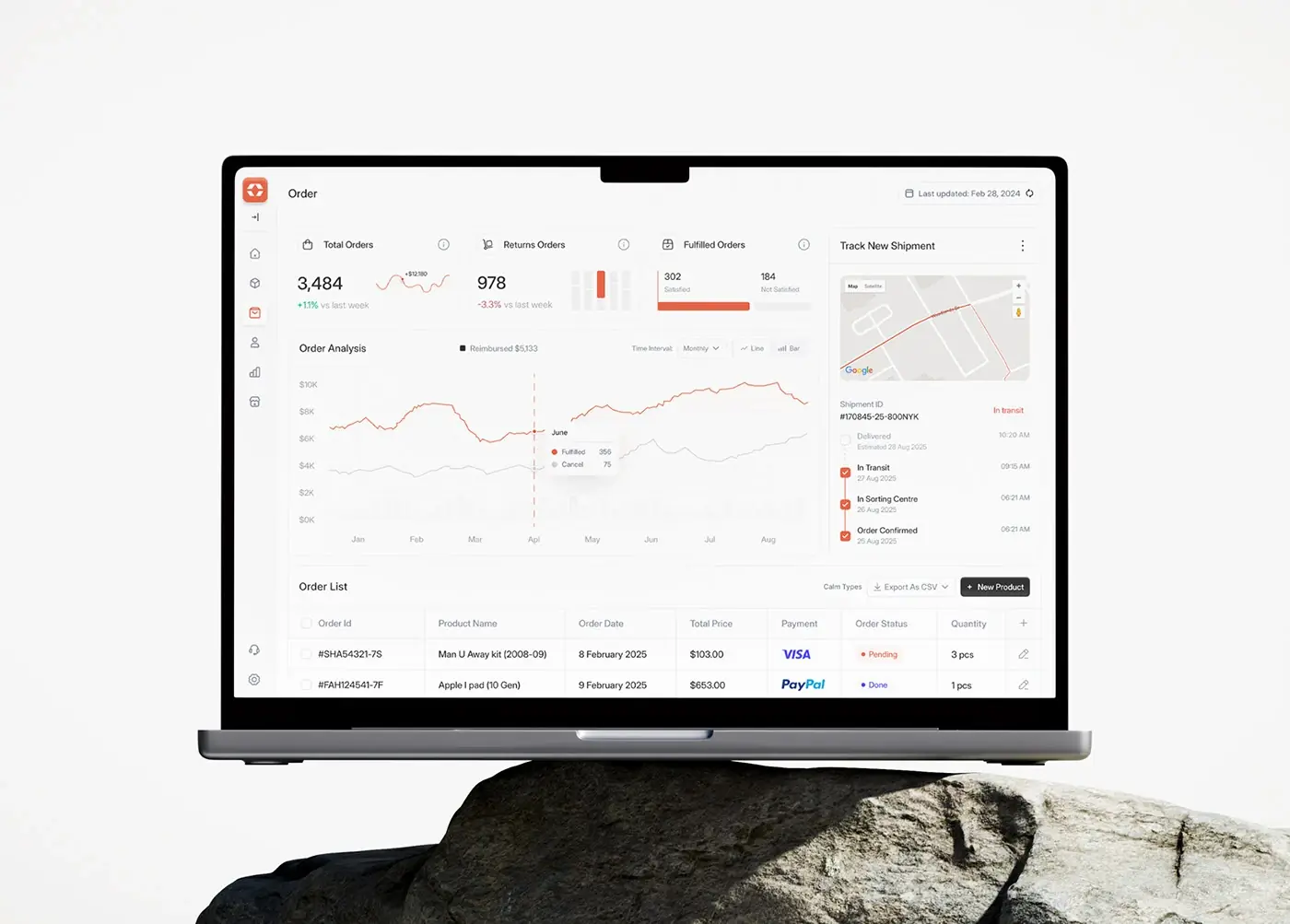
Ordering, tracking and on-time delivery in one mobile app, with the research and persona work behind it.
Read the case study →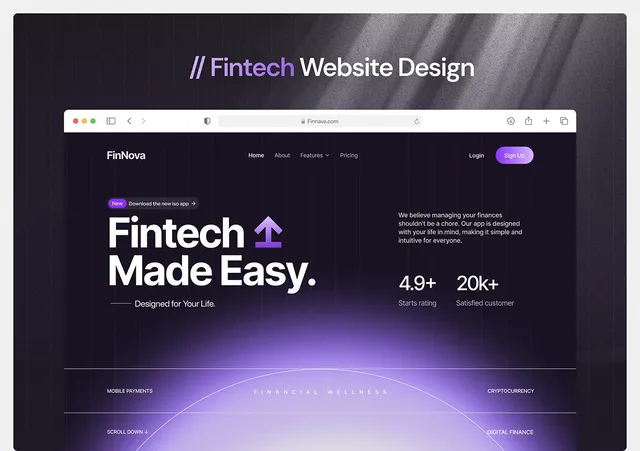
Website design · Fintech
A dark, product-led website for a fintech SaaS, designed for Webflow.
Read the case study →Does your live app look nothing like the Figma file? Let's close the gap.
Book an intro callProduction code from the person who drew the screens, written so your own engineers can keep going after I leave.
App Router pages, server components where they help, and every state from the design: loading, empty, error and success, on desktop and phone.
Tokens for colour, type and spacing, plus documented components, so your next developer builds a feature without reinventing the button, the table or the form.
Sign-in, data fetching, caching, forms and validation connected to your API or database, whether that is Supabase, Postgres or a service your team already runs.
Streaming replies, visible sources, stop and retry controls and honest limits around your model, using the patterns in my guide to shipping AI features people trust.
Core Web Vitals measured on real phones, semantic HTML, keyboard access, metadata and structured data, so the app works for people and for search engines.
Readable TypeScript, tests on the risky paths, a written README and a recorded walkthrough, with the repository and cloud accounts in your name from day one.
Four steps from first conversation to a shipped product, with the price agreed before any work starts.
Tell me what the product does, who uses it and what already exists. I will say plainly whether I am the right fit and what I would build first.
Every screen, integration and state goes on paper with the stack and the timeline, priced as one project. You approve a single number, and there is no retainer.
Weekly sprints in your repository. Design and code move on the same feature in the same week, and every pull request comes with a preview link you can click.
Speed and accessibility checks, a calm release, then a README, tests and a recorded session that brings the engineers you hire next up to speed.
Each sector asks something different of a front end. The images come from real work I did in that field.
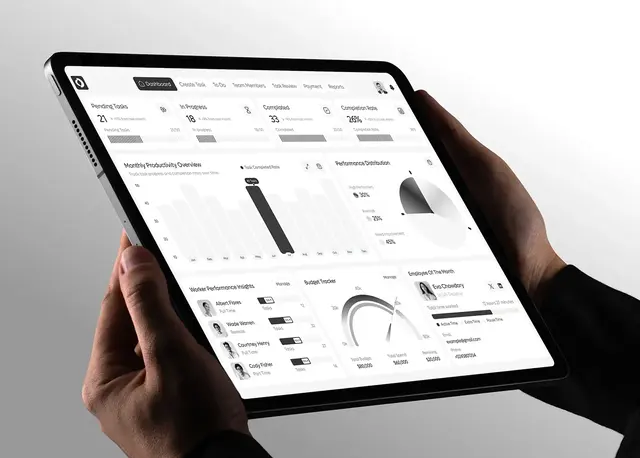
Dense tables, filters, roles and permissions, and reporting views that hold up under real data. Business buyers judge a product by how quickly they finish the dull task they repeat every day.
My b2b saas work →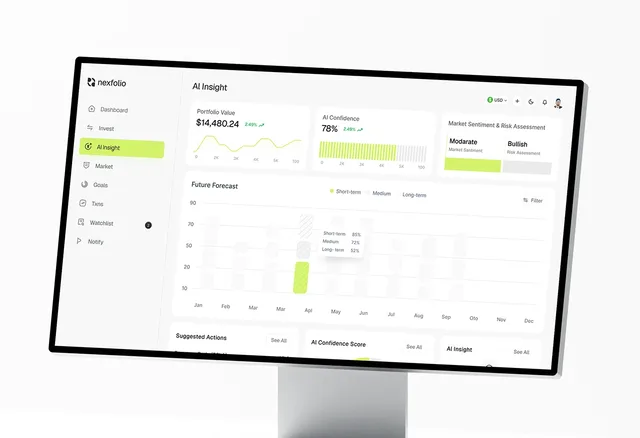
Charts that update smoothly, numbers that never round wrongly, firm confirmation steps and clear audit trails. In a finance product, trust is earned one screen at a time, and lost the same way.
My fintech work →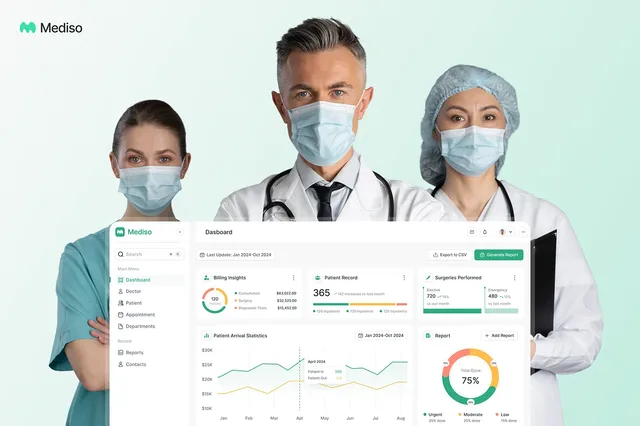
Scheduling, records and patient flows that busy staff use between appointments, with careful permissions and accessible forms. Here clarity matters far more than decoration, and every extra click costs time.
My healthcare work →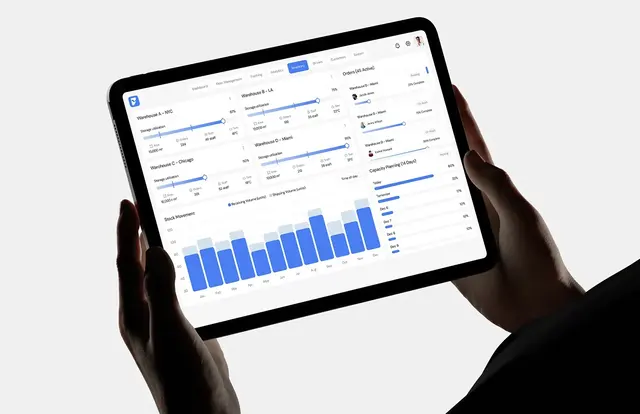
Live maps, status timelines and dispatcher views that update in real time, plus phone screens for drivers who work outdoors with one free hand and a weak signal.
My logistics work →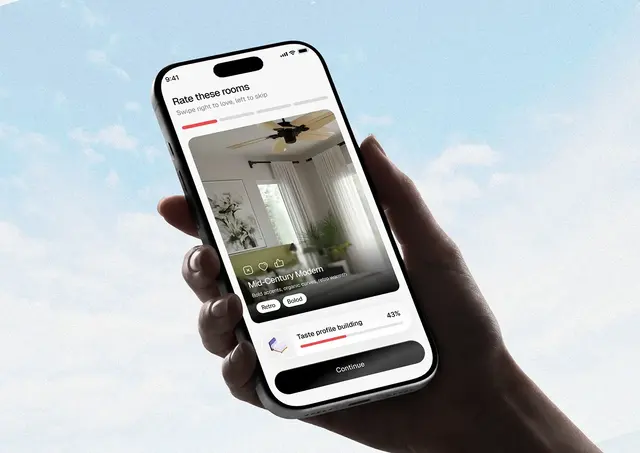
Streaming results, visible progress, sources, and controls to stop, retry or undo. The interface around the model decides whether people believe what it produced and come back tomorrow.
My ai products work →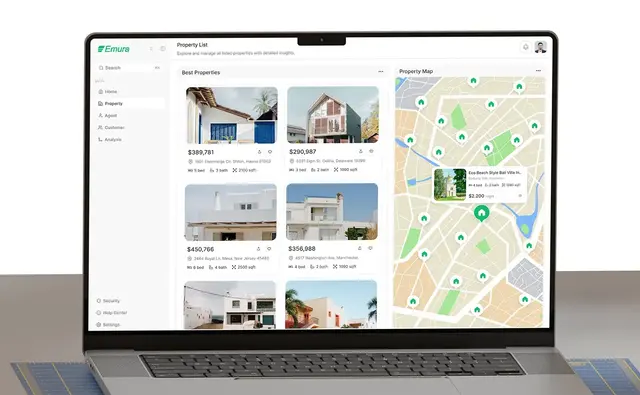
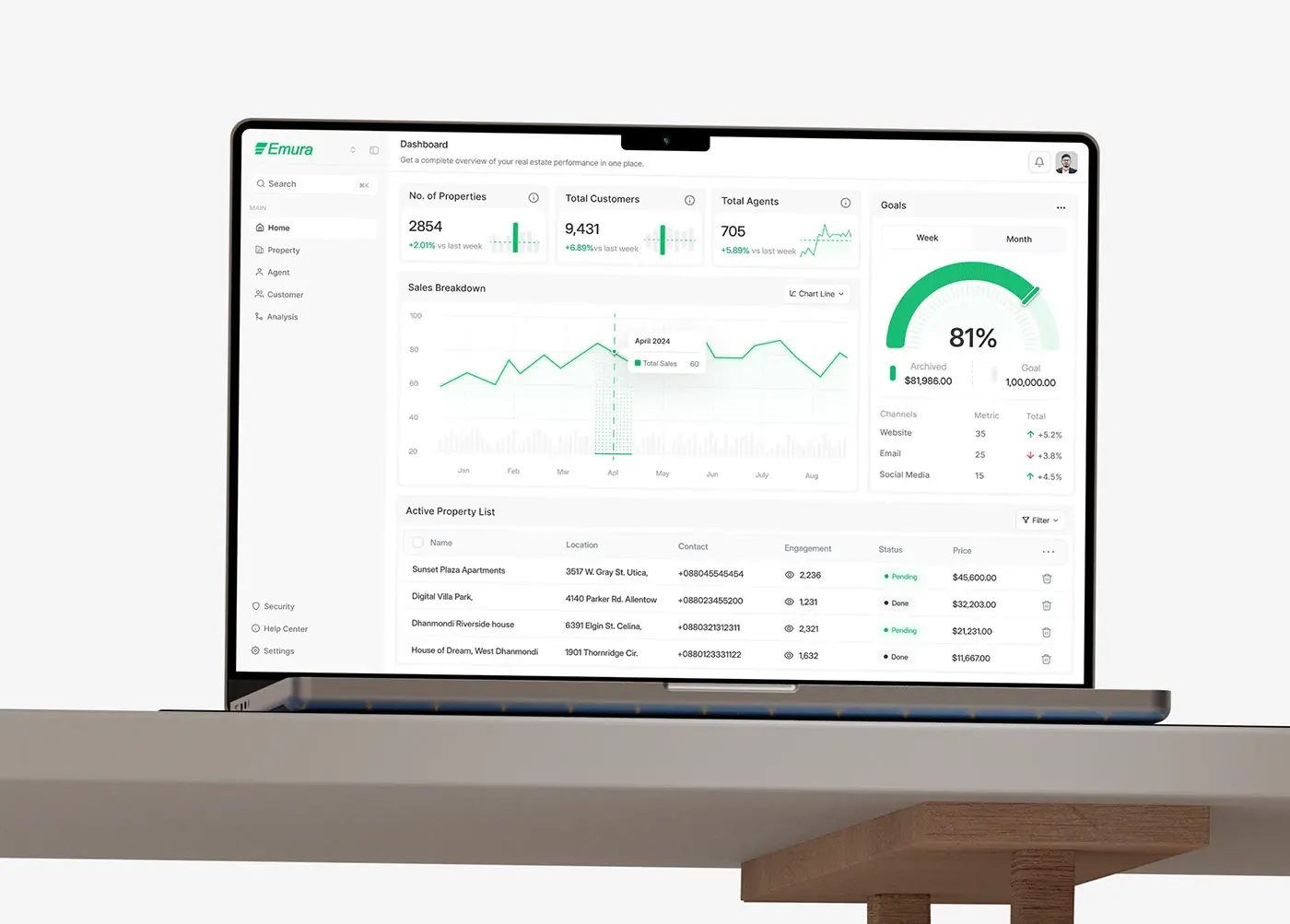
Listings with maps and filters, agent dashboards and enquiry flows, where image-heavy pages still have to load quickly on a phone held in a viewing.
My real estate work →Remote does not have to mean distant. This is how I stay close to your team.
7hours of your working day overlap mine
No account managers. I design and build your product, answer you directly in one shared Slack channel, and lead the weekly call myself.
I share the afternoon with Europe and most of the day with the Gulf and Asia. For the US, I keep evening calls, 7 to 10 pm my time, which is your morning.
Figma for design, your repository for code, a written Slack summary every 48 hours, and working software on screen at each weekly review, never slides.
Right-to-left Arabic layouts, national sign-in systems such as Smart-ID, local payment methods and privacy rules go into the scope, not into a fix after launch.
Each choice suits a different stage. Here is where each one is strong, and where it is not.
| What you get | With me | In-house hire | Freelancer |
|---|---|---|---|
| Design and code from one accountable person | Yes | No | Sometimes |
| No hiring process before work begins | Yes | No | Yes |
| Several senior skills on one project | Yes | Sometimes | No |
| Work continues through holidays and sick days | Yes | No | No |
| Price fixed before the first sprint | Yes | No | Sometimes |
| Knowledge stays inside your company for years | Sometimes | Yes | No |
| Physically in your office | No | Yes | Sometimes |
Four kinds of founder bring their build to me. Most arrive with a design, a deadline or both.
You need a first version that looks credible to users and investors, and you cannot spend months hiring. I design and build the MVP, then hand it cleanly to your first engineer.
Your engineers own the core product. I take a defined piece, such as an admin tool, a customer portal or a new onboarding, and build it to your conventions and review rules.
Your Framer, Webflow or Bubble product has hit its limits. I help you decide what should move to Next.js, using this comparison, then rebuild it without losing what works.
Entering the Gulf, Europe or Southeast Asia brings new languages, sign-in systems and rules. I plan right-to-left layouts, local identity and payment methods into the build from the first sprint.
I work remotely, with real overlap in your working day.
Web development in Dubai with React and Next.js: Arabic and English, UAE PASS, Aani and hosting inside the UAE, from one developer.
How I work with Dubai teams →Web app development in Riyadh, in React and Next.js: built right to left, with Nafath, mada and PDPL-aware hosting.
How I work with Riyadh teams →Web apps in Next.js for Estonian founders, with Smart-ID sign-in and three languages built in.
How I work with Tallinn teams →Accessible React and Next.js front ends for Dutch teams, ready for the EAA and Wero.
How I work with Amsterdam teams →The best front ends start from a clear design. Most of my build clients start with one of these.
“The final product exemplified Muhammed’s profound comprehension of UI design principles, presenting a visually captivating experience that was both seamless and intuitive for users.”
 Youssef RzikiClient, oil and gas trade
“I highly recommend Jubayer for any design project. He quickly grasps complex concepts, excels in standard design practices, and responds promptly.”
 Abhishek NaleProduct lead, Strell
Practical reads on stacks, AI interfaces and handoff, written from my own projects.
Development · 10 min read

Development · 16 min read

Development · 15 min read
Small jobs from this kind of work, done in your browser. Free, no sign-up, and nothing you add leaves your device.
Optimise an SVG with SVGO and turn it into a React or React Native component, a data URI or CSS.
Convert DTCG, Figma and Tokens Studio JSON into a Tailwind v4 @theme, CSS variables, SCSS and TypeScript.
Exact token counts with OpenAI's published encodings, a context window budget, a token map and a chunker, in the browser.
Short, complete answers to the doubts founders raise before trusting a remote developer with their codebase.
Ask me on a free callA free 30 minute call. You leave with a clear next step, whether we work together or not.
Book a free intro call